Search results for:

Byanitasm

Live for Life

[vc_row][vc_column width=”1/1″][vc_column_text]

Living vegan

Do you believe that non-human animals shouldn’t be harmed needlessly?
Do you believe that animals matter morally?

If you just answered yes to either of those two questions the only logical thing to do is commit to living a cruelty-free vegan lifestyle.

[/vc_column_text][/vc_column][/vc_row][vc_row type=”full_width_background” bg_position=”left top” bg_repeat=”no-repeat” parallax_bg_speed=”slow” bg_color=”#e8ede8″ scene_position=”center” text_color=”dark” text_align=”left” top_padding=”10″ bottom_padding=”10″][vc_column width=”1/2″][vc_column_text]

What do vegans eat?

This is a question we get a lot, and the answer is a huge range of plant-based foods. But it is not so much what vegans DO eat, the quicker answer is what we DON’T eat.

Here is a list of foods that vegans avoid:

  • Animal flesh including red meat, poultry and fish
  • Eggs
  • Dairy products
  • Honey
  • Other animal by-products

Almost any recipe can be redesigned to replace animal products with plant-based products, once you get the hang of it, it becomes second-nature! By cooking vegan many people realise that their food has more flavour, texture and variety than they had ever experienced before.

You can get all of the nutrients you need from plant foods easily if you eat a varied diet and veganism has the added bonus of cutting out harmful saturated fats and animal cholesterol.
The American Dietetics Association states that “..vegan diets are healthful and nutritionally adequate, and may provide health benefits in the prevention and treatment of certain diseases.”[/vc_column_text][/vc_column][vc_column width=”1/2″ animation=”none” column_padding=”no-extra-padding” column_padding_position=”all” background_color_opacity=”1″ background_hover_color_opacity=”1″][image_with_animation image_url=”14″ animation=”Fade In” img_link_target=”_self”][vc_column_text]
[/vc_column_text][/vc_column][/vc_row][vc_row][vc_column width=”1/2″][vc_column_text]
[/vc_column_text][/vc_column][vc_column width=”1/2″][vc_column_text]

Clothing

Vegans also avoid buying materials that are derived from animals.

These include:

  • Wool
  • Silk
  • Cashmere
  • Angora
  • Leather
  • Duck and goose down and feathers

We choose instead natural plant derived fibres such as cotton, hemp and linen or synthetic materials.

Cosmetics and Personal Care

Vegans avoid buying products that contain animal-derived ingredients or that have been tested on animals.

Entertainment

Entertainment based on the exploitation of animals is also unnecessary and should be avoided. Boycott and voice your opposition to: rodeos, circuses (with animals), horse racing, greyhound racing, zoos and theme parks with animals etc.[/vc_column_text][/vc_column][/vc_row][vc_row][vc_column width=”1/2″][vc_column_text]

Companion Animals

It is typical among vegans, and other caring individuals, to choose companion animals from shelters and pounds. This is done for the simple fact that these animals are in need of a home and are not being bred for the purpose of making money. Any breeding is done at the expensive of the animal’s well-being. This is particularly true of dogs.

Puppy farms exist all over Australia and they churn out puppies at a rate of knots to satisfy the demand for “cute” puppies that get sold through “pet shops” and the like. Often these puppies grow up to be dogs and the appeal ceases. They are then neglected or “surrendered” to a shelter because they are “too much work” to look after properly. The puppy farms themselves are some of the worst “factory farms” where dogs are kept in appalling conditions, and forced to produce litter after litter of puppies to meet “consumer demand”.

Demand something better for companion animals. Choose you next friend from a shelter or pound and give them a new life.

[/vc_column_text][/vc_column][vc_column width=”1/2″][vc_column_text]
[/vc_column_text][/vc_column][/vc_row][vc_row][vc_column width=”1/1″][vc_column_text]

How to Live Vegan in Tasmania

Meeting other vegans

For supporting on becoming vegan to meet other vegans, to a look at the Facebook group: Tasmanian Vegans. This is a supportive group that can answer all your questions on where to shop and where to find delicious vegan foods in Tasmania as well as running regular meet-ups and pot lucks to meet like-minded individuals and share amazing foods.

If you aren’t connected to Facebook we also have an email:
tasmanianvegans@gmail.com where you can request to be notified of up and coming meet-ups.

Tasmanian Vegans also has a sister Facebook group: Vegan Cook and Share Tassie. This is where we post all of our vegan food appreciation for meal inspiration and share recipes.

[/vc_column_text][/vc_column][/vc_row][vc_row][vc_column width=”1/2″][vc_column_text]

Cheat sheets for some vegan products:

What is vegan at Coles (keep in mind that this list changes)?
www.veggieful.com/2013/02/vegan-groceries-at-coles-australiawww.veggieful.com/2013/02/vegan-groceries-at-coles-australia

What is vegan at Woolworths?
www.veggieful.com/2012/07/vegan-groceries-at-woolworths-australia

Vegan cheat-sheet including health and beauty, cleaning agents and foods
www.livingvegan.com.au/vegan-cheat-sheet
avegansmiles.com.au/veganproducts[/vc_column_text][/vc_column][vc_column width=”1/2″][vc_column_text]

Other Tasmania Specific Resources

Vegetarian Tasmania website: www.tasveg.org

Vegan Tasmania website: www.vegantasmania.com

Other Vegan Resources
Assistance in making the transition

veganeasy.org
vegankit.com

www.pcrm.org/health/diets/kickstart/kickstart-programs
[/vc_column_text][/vc_column][/vc_row][vc_row type=”full_width_background” bg_position=”left top” bg_repeat=”no-repeat” parallax_bg_speed=”slow” bg_color=”#e8ede8″ scene_position=”center” text_color=”dark” text_align=”left” top_padding=”10″ bottom_padding=”10″][vc_column width=”1/1″][vc_column_text]

Why Vegan?

As Animals Tasmania is an animal advocacy organisation, much of our education is dedicated to the protection of non-human animals. There are however many other very good reasons to live vegan for the planet, for humanity and for your own health as well as the animals.

Vegan for the Planet

Every year humans kill over 50 billion land animals worldwide to feed themselves. This means that every year we are keeping 50 billion extra animals on the land consuming valuable crops and grains, and water, and creating waste. Raising animals for food uses a crazy 30% of the Earth’s entire land mass and they create 49,400kg of waste every second! This waste pollutes water supplies, rendering them unusable. Recently it was stated that 51% of gases causing climate change are attributable to animal agriculture (animal foods).

This is a highly inefficient means of acquiring nutrition as every 1kg of meat requires between 8 and 16kg of plant foods to be fed to the animal. This means that on top of the room that the animal itself takes up in housing etc we are using 10 times more land to grow our food than is necessary. To do this we are cutting down trees and destroying natural habitats. The cattle industry is one of the biggest drivers for the felling of the Amazon rainforest along with soy production. That said, over 60% of soy is grown to feed cattle.

Raising animals for food also wastes phenomenal amounts of fresh water which we are increasingly becoming aware is not an unlimited resource. It takes more than 41,200 litres of water to produce one kilogram of meat. This means that you would save more water by refusing to eat 450g of meat than you would if you didn’t shower for six months. A vegan diet is estimated to require 1,135L of water a day while a meat-eating diet requires a crazy 15,140L.

Land degradation, destruction of natural habitats, acid rain, habitat acidification, pollution of water sources, ocean dead-zones, climate change, fresh water shortage, you name it, it can be helped in a massive way by adopting a plant-based diet.

Resources:

World Watch says 51% of climate change is associated with animal agriculture: Livestock_and_Climate_Change.pdf

The UN urges people to limit their animal consumption and adopt a more plant-based diet: http://www.theguardian.com/environment/2010/jun/02/un-report-meat-free-diet

Fact sheets on resources used and waste produced in the production of animal products: http://www.culinaryschools.org/yum/vegetables/
http://www.veganoutreach.org/whyvegan/environment.html

Please consider watching the movie ‘Cowspiracy’ to learn more about the impact of our diets on the environment.[/vc_column_text][/vc_column][/vc_row][vc_row][vc_column width=”1/2″][vc_column_text]

Vegan for the People

As mentioned above, we feed between 8 and 16kg of grains etc to animals in order to procure 1kg of flesh. If, instead of cycling our nutrients through an animal in this highly inefficient manner, we simply ate the plant foods directly, it is estimated that we would have 70% more food in the world’s supply which would be enough to feed an extra 4 billion humans. Now considering that there are an estimated 925 million people worldwide suffering from starvation, it could be surmised that we have in fact found the answer to world hunger!

The Earth without a doubt provides enough resources to meet every person’s need, it can’t, however, meet every person’s greed.

Resources:

http://gentleworld.org/could-veganism-end-world-hunger/

[/vc_column_text][/vc_column][vc_column width=”1/2″][vc_column_text]

Vegan for your Health

The evidence regarding the health effects of a plant-based diet is still being gathered and many people notice surprising significant improvements in their health after committing to a plant-based diet. Many report a decrease in headaches and other pains, decreasing anxiety and depression, a greater sense of vitality and many other amazing effects. There are different experiences for everyone. As this is a large section we have linked to a researched journal article that explores the health benefits of a plant-based diet deeply.

In general, vegetarians typically enjoy a lower risk of cardiovascular disease (CVD), obesity, type 2 diabetes, and some cancers. A vegan diet appears to be useful for increasing the intake of protective nutrients and phytochemicals and for minimizing the intake of dietary factors implicated in several chronic diseases. In a recent report, different plant food groups were rated with respect to their metabolic-epidemiologic evidence for influencing chronic disease reduction.

According to the evidence criteria of the World Health Organization and Food and Agriculture Organization (WHO/FAO), cancer risk reduction associated with a high intake of fruit and vegetables was assessed as probable or possible, risk of CVD reduction as convincing, whereas lower risk of osteoporosis was assessed as probable. The evidence for a risk-reducing effect of consuming whole grains was assessed as possible for colorectal cancer and probable for type 2 diabetes and CVD. The evidence for a risk-reducing effect of consuming nuts was assessed as probable for CVD.”

http://ajcn.nutrition.org/content/89/5/1627S.full

Winston, Craig 2009, ‘Health effects of vegan diets’, The American Journal of Clinical Nutrition, Vol. 89, No. 5, Page 1627S-1633S[/vc_column_text][/vc_column][/vc_row]
Byanitasm

One off donation

Donate to Animals Tasmania and support the important work of ending pain and suffering of all non-human animals in Tasmania.  Our duty is to bring to public attention much of what is happening to animals in Tasmania. We hope by doing so that we can help end it.

We rely on your financial support to enable us to advocate effectively for all species. Your donation goes directly towards financing our campaigns and projects that are designed to raise awareness. By raising levels of understanding we expose people to many of the horrors that abound yet go largely unseen.

This is a one off donation to Animals Tasmania paid via PayPal or Visa or Mastercard. A regular payment option is also available. Note that PayPal deducts a fee for all payments. If you would like to choose another payment option (direct deposit, cheque, etc), please contact us.

Byanitasm

Regular Donation

Donate to Animals Tasmania and support the important work of ending pain and suffering of all non-human animals in Tasmania.  Our duty is to bring to public attention much of what is happening to animals in Tasmania. We hope by doing so that we can help end it.

We rely on your financial support to enable us to advocate effectively for all species. Your donation goes directly towards financing our campaigns and projects that are designed to raise awareness. By raising levels of understanding we expose people to many of the horrors that abound yet go largely unseen.

This page sets up a regular donation to Animals Tasmania via PayPal or a Visa or Mastercard. A one off donation can be made here. Note that PayPal deducts a fee for all payments. If you would like to choose another payment option (direct deposit, cheque, etc), please contact us.

Byanitasm

About

Animals Tasmania

Animals Tasmania is an independent animal advocacy organisation based in Tasmania. Our broad aim is to eliminate exploitation, abuse, and suffering of all non-human animals within our state and beyond.

We work to facilitate change through peaceful action, education and political lobbying on issues affecting all species. We encourage greater awareness and understanding of the way human choices impact on non-human animals. We represent and speak for all animals, no exceptions.

Contact Us

  • PO Box 4691 Bathurst St PO Hobart 7000
  • info@animalstasmania.org.au
  • 0408 970 359

    Your Name (required)

    Your Email (required)

    Subject

    Your Message

    Byanitasm

    Animals Tasmania one year membership

    Join Animals Tasmania and support the important work of ending pain and suffering of all non-human animals in Tasmania. Few people realise how much abuse and neglect of animals takes place within state borders. Our duty is to bring to public attention much of what is happening to animals in Tasmania. We hope by doing so that we can help end it.

    We rely on your financial support to enable us to advocate effectively for all species. Your membership goes directly towards financing our campaigns and projects that are designed to raise awareness. By raising levels of understanding we expose people to many of the horrors that abound yet go largely unseen.

    Support Animals Tasmania and add your voice to the ever growing number of Tasmanians speaking out on behalf of the voiceless. Only by refusing to stay silent can we expect to change the exploitation that has become accepted and entrenched in our society. Please join us because by doing so you can make a positive difference.

    We represent the animals. All animals, no exception.

    This membership with Animals Tasmania is for a single year. An annual recurring membership option is available here. Note that PayPal deducts a fee for all payments. If you would like to choose another payment option (direct deposit, cheque, etc), please contact us.

    Byanitasm

    2015 Duck Rescue

    P1030941-2

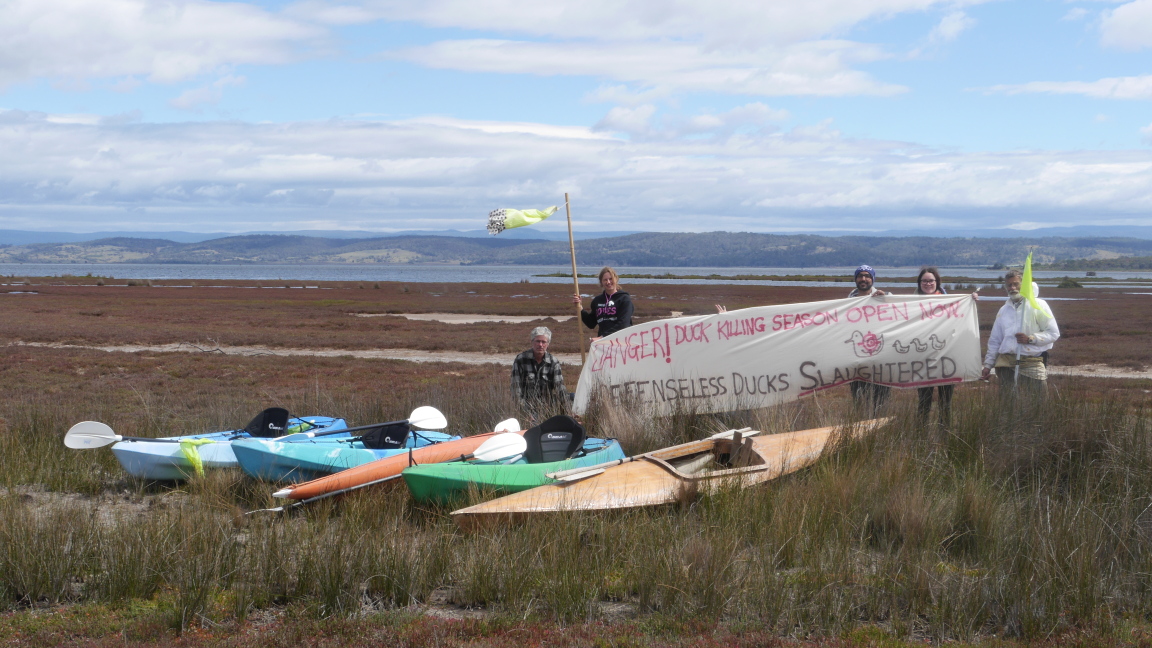
    In March this year, Animals Tasmania activists spent their weekend rescuing ducks for the opening of the duck-killing season at Moulting Lagoon. Here is the story:

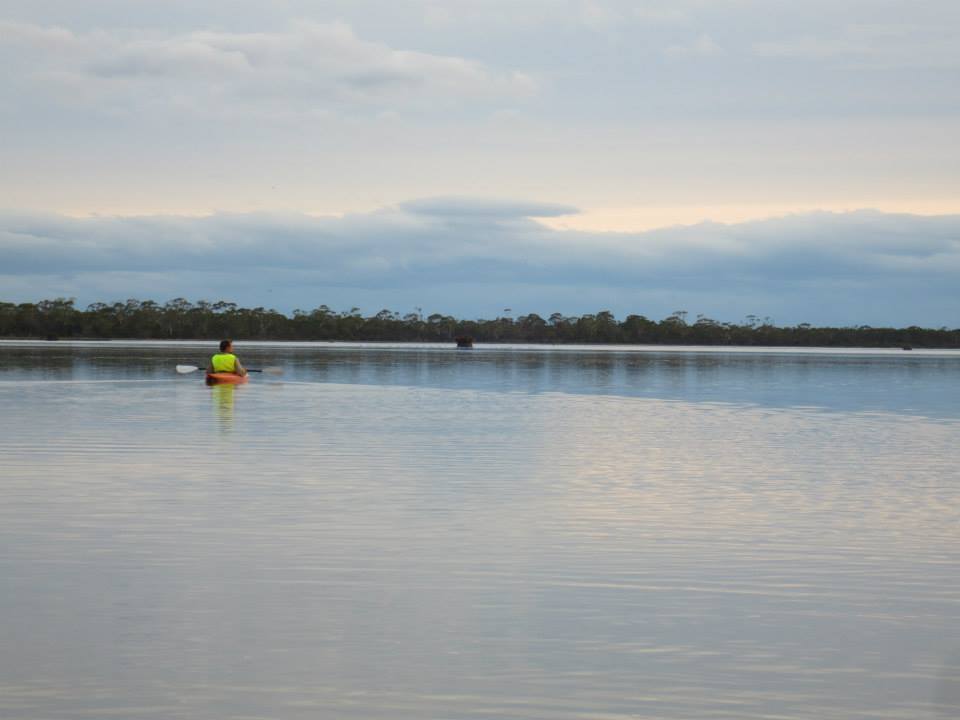
    A small group of us arrived at the campsite in the dark late Friday night after a three hour drive up the East Coast of Tasmania. We set up camp and went to bed early for a 4.30am start. We awoke with the moon still high in the sky, ate breakfast, donned our thermals and dragged our kayaks to the water by 5.30. We needed a head torch to make our way safely to the edge of the lagoon but already we were hearing the first of the gunshots resounding through the silent bay. Legally hunters are allowed to start shooting 1 hour before sunrise, this is interesting as there are many ‘non-target’ species of bird in the lagoon, many ‘illegal’ or protected species. At this time we couldn’t see two metres in front of us, much less determine mountain ducks from spoonbill ducks and swans. We climbed into our kayaks and made our way through the perfectly still water. There is an ethereal quality to sailing through such still water at that time of day.


    Kayaking across the still lagoon

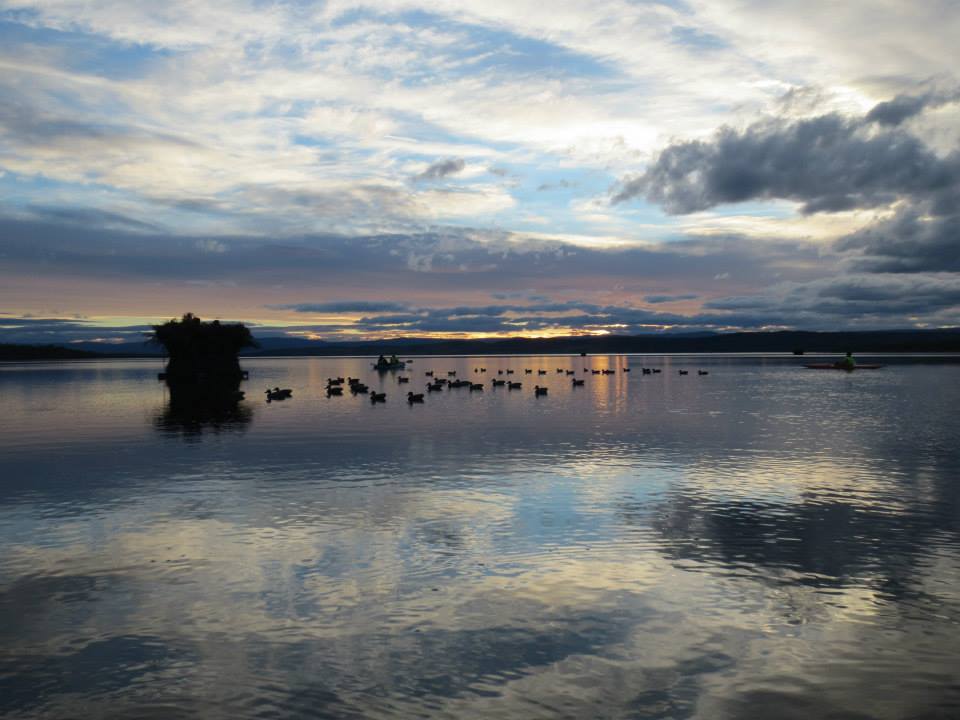
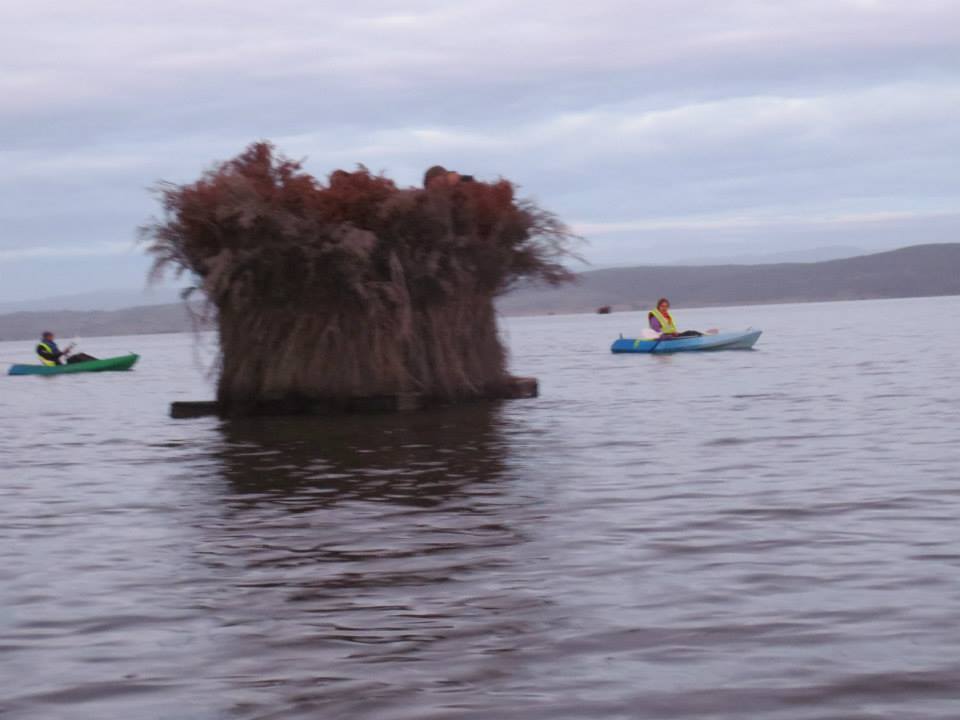
    We soon found our way to the first of the small hunting hides that punctuate the stunning lagoon. A hide is a small structure built on stilts just above the water, it is disguised with dead branches and the top is open so that a hunter can stay completely hidden while aiming a gun at unsuspecting birds. You can tell which hides the shooters occupy because they are surrounded by ‘lures’. The lures are floating, life-like duck mannequins that the shooters arrange so as to resemble a flock of ducks safely swimming around the hide. The purpose of these lures is to entice the trusting ducks that are passing by to fly down and land near the hide among ‘their kind’. Our job as activists and duck rescuers was to kayak near the occupied hides wearing high visibility clothing and attempt to divert the birds out of range of the shotguns. To do this we would use whistles and movement to signal to the ducks that the area wasn’t safe so they would fly higher and divert away from the hidden danger. The shot guns have a range of 50 metres and work by releasing a spray of small steel pellets that span out to cover a wide ‘kill spread’ when aiming at a group of birds. This is helpful for hunters because they don’t require a lot of skill to hit a bird. It is awful for the ducks because for every one who may be mortally injured there may be ten ducks that suffer injuries from these pellets that allow them to get away. Many are disabled and die slowly over the coming two to three days. It isn’t uncommon to see a group of ducks flying in a beautiful V formation over the hides, to hear a shot, and then to see one or two of the group suddenly jerk as if they have been hit and continue flying. For these reasons, our main objective as rescuers was to peacefully divert the ducks out of range of the shotguns to protect them from both mortal and sub-mortal injuries.

    A hide surrounded by lures on moulting lagoon

    Warning ducks away from the hides

    Warning ducks away from the hides


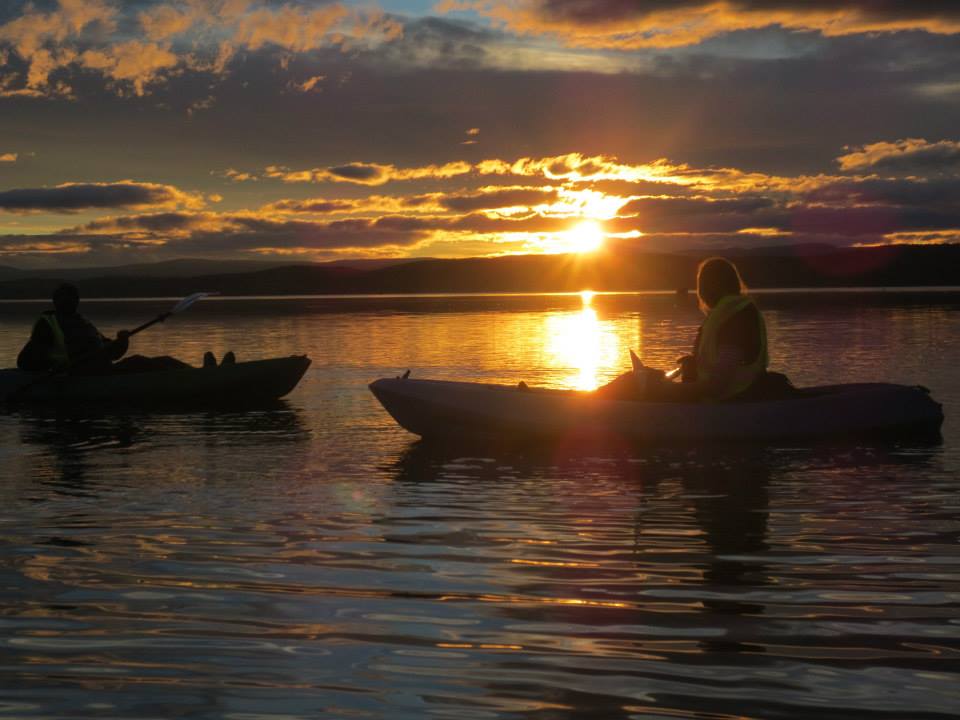
    Another method that we employed to save birds was to chat to the hunters about what their motivations were for shooting the birds in the pristine lagoon. We received varied responses from the shooters. Some explained that they came to the lagoon for a sense of tradition, that they were the fifth generation to take lives in their particular hide. Unfortunately however some of the most harmful words throughout history have been ‘it has always been done this way’. Other shooters explained that they had a deep love of the environment. This is understandable; the lagoon is pristine, nearly untouched raw Tasmania. The water reflects the sky and is dotted with flocks of graceful black swans and the occasional regal pelican, only marred by the numerous hides disturbing the natural banks. Flocks of ducks form V formations overhead and both the sunrise and the sunset light up the sky in an incredible display of pinks and orange.

    Moulting lagoon at sunset

    Moulting lagoon at sunset

    duck-rescue-4


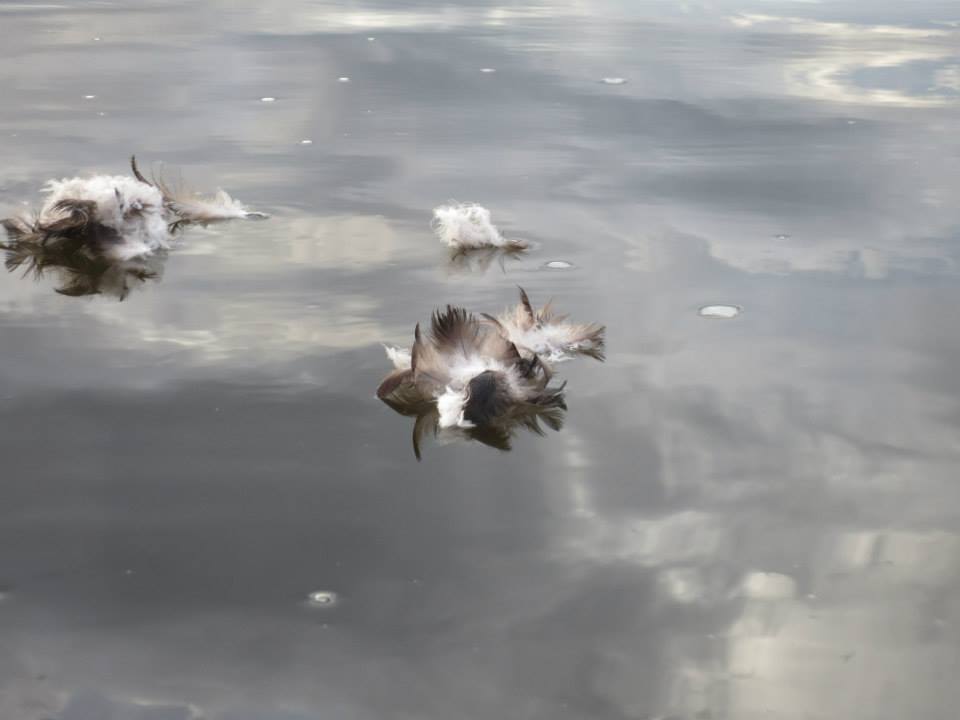
    This, however, doesn’t explain the need to cover the soundtrack of swans honking and birds singing with the shocking boom of shots fired, to rearrange the V formations by removing group members or why one would want to disturb the glassy waters with clumps of feathers ripped from a trusting duck’s still-warm body. I might suggest one could perhaps enjoy the spectacular environment all the more should they replace the loud and violent shotgun with a quiet and kind camera and binoculars.


    Of course, not all of the responses we got were so civil. We were sworn at and called all forms of atrocities. There were jeers and there were, interestingly, death threats. One of our activists was threatened with a shot gun aimed at her chest and was told by the men that they would push her out of her kayak. She felt the need get out of her kayak for her own safety and as a result risked drowning in the muddy bottom of the lagoon. Three more of us were threatened, told that we would get a bullet between the eyes and that the shooter would ‘spear’ us, cave our heads in with a rock and numerous other horrific threats including rape of our female activists. This shooter proceeded to throw large rocks at us and threatened us with death should we touch any of his decoys, something we never intended to do. We were simply kayaking in a public lagoon, occasionally we would blow our whistles and splash the water. Everything that we were doing was legal and we received numerous death threats from those that held gun licenses and loaded weapons. In Tasmania we issue over 1000 duck hunting licenses every year, this license gives the shooter the right to kill a maximum of 10 ducks per day throughout the season. The duck-shooting season lasts for three months. Doing some quick math, if a hunter was particularly motivated and ‘skillful’, it would be legal for him or her to kill 10 ducks a day for approximately 90 days. 900 ducks a season. As we issue 1000 licenses each year we legalise the killing of 900,000 ducks in Tasmania every year over one quarter of the year. This is without taking into account those injured that the hunter doesn’t get to collect that don’t then move him towards his bag limit. It should also be noted that several duck species are monogamous and only take one partner for life so when one is shot the other is incapable of going on to breed.

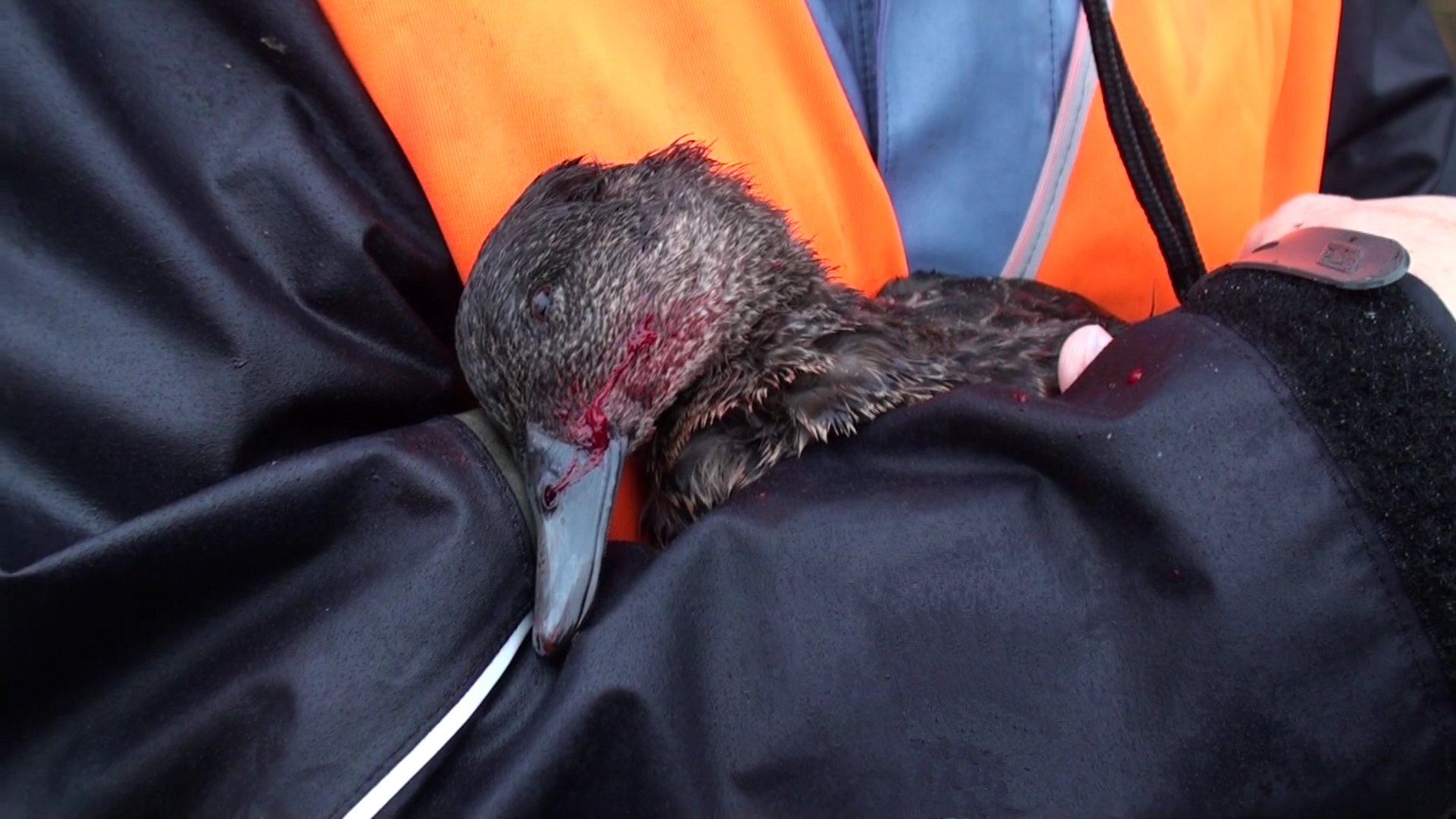
    One of of our activists cradles a victim of the open season

    One of of our activists cradles a victim of the open season

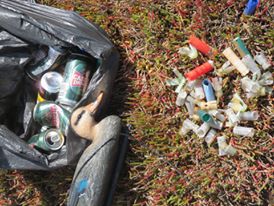
    I suppose one shouldn’t be surprised by this, let’s call it, ‘inhibition’ as some of the members of our group heard the very regular sound of empty cans being dropped inside the hides they were guarding and when we cleaned up a small portion of the bank of the lagoon on the last day we picked up a bag full of empty beer cans and plastic rings from six packs amongst the many non-biodegradable shot casings littering the shore. This calls into question the arguments about hunters being the ‘true conservationists’ and doing it for a love of the environment.

    Cleaning up the shores of Moulting Lagoon

    Cleaning up the shores of Moulting Lagoon

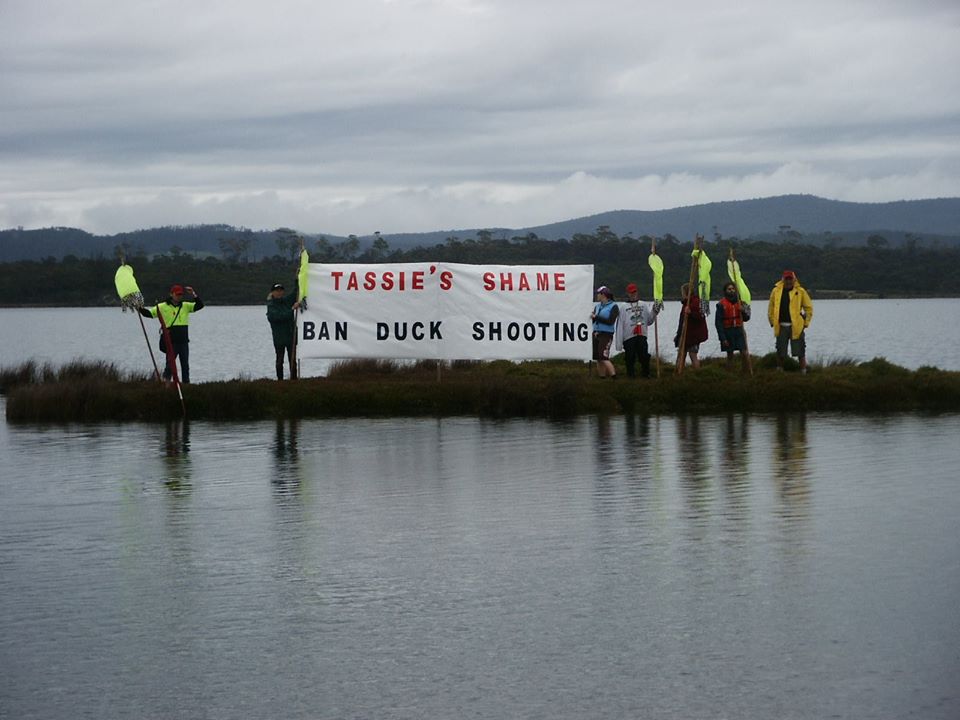
    Duck hunting is a cruel pastime that inevitably stresses sensitive water-bird populations, that has no guarantee of accuracy or mortality and leaves many animals maimed, to die slowly over coming days and the number of ducks that may legally be killed is unsustainable. The law in no way guarantees that protected species won’t be harmed and the reasons of tradition and ‘conservation’ are tired excuses for ‘big men’ compensating for something. Our public camping grounds and pristine local travel destinations are marred with violence towards animals as well as danger to the general public and death threats to those legally attempting to enjoy the pleasures of the lagoon. Duck hunting is already illegal in several Australian states and Tasmania is the next place that needs to make this legislative move. Until we do duck hunting is marring our tourist destinations and will remain one of Tassie’s great shames.

    tassie shame

    Ban duck shooting!

    Byanitasm

    for all animals,
    no exceptions.

    Animals Tasmania is an independent animal advocacy organisation based in Tasmania. Our broad aim is to eliminate exploitation, abuse, and suffering of all non-human animals within our state and beyond.

    We work to facilitate change through peaceful action, education and political lobbying on issues affecting all species. We encourage greater awareness and understanding of the way human choices impact on non-human animals. We represent and speak for all animals, no exceptions.


    Recent News and Posts

    Contact us

      Your Name (required)

      Your Email (required)

      Subject

      Your Message

      Photo courtesy of Jon Bryan
      Byanitasm

      Animals Tasmania Annual membership

      Join Animals Tasmania and support the important work of ending pain and suffering of all non-human animals in Tasmania. Few people realise how much abuse and neglect of animals takes place within state borders. Our duty is to bring to public attention much of what is happening to animals in Tasmania. We hope by doing so that we can help end it.

      We rely on your financial support to enable us to advocate effectively for all species. Your membership goes directly towards financing our campaigns and projects that are designed to raise awareness. By raising levels of understanding we expose people to many of the horrors that abound yet go largely unseen.

      Support Animals Tasmania and add your voice to the ever growing number of Tasmanians speaking out on behalf of the voiceless. Only by refusing to stay silent can we expect to change the exploitation that has become accepted and untrenched in our society. Please join us because by doing so you can make a positive difference.

      We represent the animals. All animals, no exception.

      This membership is an annual subscription and payments will be recurring every 12 months. A single year option is available here. Note that PayPal deducts a fee for all payments. If you would like to choose another payment option (direct deposit, cheque, etc), please contact us.