Search results for:

Byanitasm

Links

Content coming soon……

Byanitasm

Live for Life

Living vegan

Do you believe that non-human animals shouldn’t be harmed needlessly?
Do you believe that animals matter morally?

If you just answered yes to either of those two questions the only logical thing to do is commit to living a cruelty-free vegan lifestyle.

How to live vegan

What do vegans eat?

This is a question we get a lot, and the answer is a huge range of plant-based foods. But it is not so much what vegans DO eat, the quicker answer is what we DON’T eat.

Here is a list of foods that vegans avoid:

  • Animal flesh including red meat, poultry and fish
  • Eggs
  • Dairy products
  • Honey
  • Other animal by-products

Almost any recipe can be redesigned to replace animal products with plant-based products, once you get the hang of it, it becomes second-nature! By cooking vegan many people realise that their food has more flavour, texture and variety than they had ever experienced before.

You can get all of the nutrients you need from plant foods easily if you eat a varied diet and veganism has the added bonus of cutting out harmful saturated fats and animal cholesterol.
The American Dietetics Association states that “..vegan diets are healthful and nutritionally adequate, and may provide health benefits in the prevention and treatment of certain diseases.”

Clothing

Vegans also avoid buying materials that are derived from animals.

These include:

  • Wool
  • Silk
  • Cashmere
  • Angora
  • Leather
  • Duck and goose down and feathers

We choose instead natural plant derived fibres such as cotton, hemp and linen or synthetic materials.

Cosmetics and Personal Care

Vegans avoid buying products that contain animal-derived ingredients or that have been tested on animals.

Entertainment

Entertainment based on the exploitation of animals is also unnecessary and should be avoided. Boycott and voice your opposition to: rodeos, circuses (with animals), horse racing, greyhound racing, zoos and theme parks with animals etc.

Companion Animals

It is typical among vegans, and other caring individuals, to choose companion animals from shelters and pounds. This is done for the simple fact that these animals are in need of a home and are not being bred for the purpose of making money. Any breeding is done at the expensive of the animal’s well-being. This is particularly true of dogs.

Puppy farms exist all over Australia and they churn out puppies at a rate of knots to satisfy the demand for “cute” puppies that get sold through “pet shops” and the like. Often these puppies grow up to be dogs and the appeal ceases. They are then neglected or “surrendered” to a shelter because they are “too much work” to look after properly. The puppy farms themselves are some of the worst “factory farms” where dogs are kept in appalling conditions, and forced to produce litter after litter of puppies to meet “consumer demand”.

Demand something better for companion animals. Choose you next friend from a shelter or pound and give them a new life.

How to Live Vegan in Tasmania

Meeting other vegans

For supporting on becoming vegan to meet other vegans, to a look at the Facebook group: Tasmanian Vegans. This is a supportive group that can answer all your questions on where to shop and where to find delicious vegan foods in Tasmania as well as running regular meet-ups and pot lucks to meet like-minded individuals and share amazing foods.

If you aren’t connected to Facebook we also have an email:
tasmanianvegans@gmail.com where you can request to be notified of up and coming meet-ups.

Tasmanian Vegans also has a sister Facebook group: Vegan Cook and Share Tassie. This is where we post all of our vegan food appreciation for meal inspiration and share recipes.

Other Tasmania Specific Resources

Vegetarian Tasmania website: www.tasveg.org

Vegan Tasmania website: www.vegantasmania.com

Other Vegan Resources
Assistance in making the transition

veganeasy.org
vegankit.com

www.pcrm.org/health/diets/kickstart/kickstart-programs
Cheat sheets for some vegan products:

What is vegan at Coles (keep in mind that this list changes)?
www.veggieful.com/2013/02/vegan-groceries-at-coles-australiawww.veggieful.com/2013/02/vegan-groceries-at-coles-australia

What is vegan at Woolworths?
www.veggieful.com/2012/07/vegan-groceries-at-woolworths-australia

Vegan cheat-sheet including health and beauty, cleaning agents and foods
www.livingvegan.com.au/vegan-cheat-sheet
avegansmiles.com.au/veganproducts

Why Vegan?

As Animals Tasmania is an animal advocacy organisation, much of our education is dedicated to the protection of non-human animals. There are however many other very good reasons to live vegan for the planet, for humanity and for your own health as well as the animals.

Vegan for the Planet

Every year humans kill over 50 billion land animals worldwide to feed themselves. This means that every year we are keeping 50 billion extra animals on the land consuming valuable crops and grains, and water, and creating waste. Raising animals for food uses a crazy 30% of the Earth’s entire land mass and they create 49,400kg of waste every second! This waste pollutes water supplies, rendering them unusable. Recently it was stated that 51% of gases causing climate change are attributable to animal agriculture (animal foods).

This is a highly inefficient means of acquiring nutrition as every 1kg of meat requires between 8 and 16kg of plant foods to be fed to the animal. This means that on top of the room that the animal itself takes up in housing etc we are using 10 times more land to grow our food than is necessary. To do this we are cutting down trees and destroying natural habitats. The cattle industry is one of the biggest drivers for the felling of the Amazon rainforest along with soy production. That said, over 60% of soy is grown to feed cattle.

Raising animals for food also wastes phenomenal amounts of fresh water which we are increasingly becoming aware is not an unlimited resource. It takes more than 41,200 litres of water to produce one kilogram of meat. This means that you would save more water by refusing to eat 450g of meat than you would if you didn’t shower for six months. A vegan diet is estimated to require 1,135L of water a day while a meat-eating diet requires a crazy 15,140L.

Land degradation, destruction of natural habitats, acid rain, habitat acidification, pollution of water sources, ocean dead-zones, climate change, fresh water shortage, you name it, it can be helped in a massive way by adopting a plant-based diet.

Resources:

World Watch says 51% of climate change is associated with animal agriculture: Livestock_and_Climate_Change.pdf

The UN urges people to limit their animal consumption and adopt a more plant-based diet: http://www.theguardian.com/environment/2010/jun/02/un-report-meat-free-diet

Fact sheets on resources used and waste produced in the production of animal products: http://www.culinaryschools.org/yum/vegetables/
http://www.veganoutreach.org/whyvegan/environment.html

Please consider watching the movie ‘Cowspiracy’ to learn more about the impact of our diets on the environment.

Vegan for the People

As mentioned above, we feed between 8 and 16kg of grains etc to animals in order to procure 1kg of flesh. If, instead of cycling our nutrients through an animal in this highly inefficient manner, we simply ate the plant foods directly, it is estimated that we would have 70% more food in the world’s supply which would be enough to feed an extra 4 billion humans. Now considering that there are an estimated 925 million people worldwide suffering from starvation, it could be surmised that we have in fact found the answer to world hunger!

The Earth without a doubt provides enough resources to meet every person’s need, it can’t, however, meet every person’s greed.

Resources:

http://gentleworld.org/could-veganism-end-world-hunger/

Vegan for your Health

The evidence regarding the health effects of a plant-based diet is still being gathered and many people notice surprising significant improvements in their health after committing to a plant-based diet. Many report a decrease in headaches and other pains, decreasing anxiety and depression, a greater sense of vitality and many other amazing effects. There are different experiences for everyone. As this is a large section we have linked to a researched journal article that explores the health benefits of a plant-based diet deeply.

In general, vegetarians typically enjoy a lower risk of cardiovascular disease (CVD), obesity, type 2 diabetes, and some cancers. A vegan diet appears to be useful for increasing the intake of protective nutrients and phytochemicals and for minimizing the intake of dietary factors implicated in several chronic diseases. In a recent report, different plant food groups were rated with respect to their metabolic-epidemiologic evidence for influencing chronic disease reduction.

According to the evidence criteria of the World Health Organization and Food and Agriculture Organization (WHO/FAO), cancer risk reduction associated with a high intake of fruit and vegetables was assessed as probable or possible, risk of CVD reduction as convincing, whereas lower risk of osteoporosis was assessed as probable. The evidence for a risk-reducing effect of consuming whole grains was assessed as possible for colorectal cancer and probable for type 2 diabetes and CVD. The evidence for a risk-reducing effect of consuming nuts was assessed as probable for CVD.”

http://ajcn.nutrition.org/content/89/5/1627S.full

Winston, Craig 2009, ‘Health effects of vegan diets’, The American Journal of Clinical Nutrition, Vol. 89, No. 5, Page 1627S-1633S

Byanitasm

Wildlife

[vc_row][vc_column width=”1/1″][vc_column_text]

Wildlife

[/vc_column_text][/vc_column][/vc_row]

[vc_row type=”full_width_background” bg_position=”left top” bg_repeat=”no-repeat” parallax_bg_speed=”slow” bg_color=”#e8ede8″ scene_position=”center” text_color=”dark” text_align=”left” top_padding=”10″ bottom_padding=”10″]

[vc_column width=”2/3″][vc_column_text]

Killing Seasons

Many native wildlife species are subject to annual ‘recreational’ killing seasons including five species of ducks, brown quail and short-tailed shearwaters. This annual blood-shed is legitimised as ‘recreation’ in Tasmania and other states. Often shooters justify this killing as being necessary for ‘wildlife management’. This justification uses the arrogant concept that humans should dictate to other species how many of them are allowed to exist based on how they impact on human endeavours and how much enjoyment humans get out of killing them. Humans need to respect wildlife and learn non-violent ways to live with them.

[/vc_column_text][/vc_column]

[vc_column width=”1/3″ animation=”none” column_padding=”no-extra-padding” column_padding_position=”all” background_color_opacity=”1″ background_hover_color_opacity=”1″]

A pair of Chestnut Teal

Chestnut Teal

[/vc_column][/vc_row]

[vc_row type=”full_width_background” bg_position=”left top” bg_repeat=”no-repeat” parallax_bg_speed=”slow” bg_color=”#ffffff” scene_position=”center” text_color=”dark” text_align=”left” top_padding=”10″ bottom_padding=”10″]

[vc_column width=”1/3″ animation=”none” column_padding=”no-extra-padding” column_padding_position=”all” background_color_opacity=”1″ background_hover_color_opacity=”1″]

Bennetts Wallaby

Bennetts Wallaby

[/vc_column]

[vc_column width=”2/3″][vc_column_text]

“Culling” and “Management”

Non-human animals are killed in large numbers because they are seen to interfere with human activities. For example wallabies and possums are shot and poisoned in their hundreds of thousands because they are seen to conflict with agriculture and forestry. Often the only reason that they interfere at all is because humans have destroyed their natural habitats and replaced them with the very industries that they are being killed to protect. Just recently humans killed over 700 koalas in South Australia, even though they are disappearing and becoming endangered all throughout the rest of Australia because they were ‘starving’ due to habitat destruction. When challenged with the question as to why they weren’t relocated the answer was ‘that they wouldn’t cope well with being relocated’. Unfortunately the koalas didn’t cope well with being killed either.

[/vc_column_text][/vc_column][/vc_row]

[vc_row type=”full_width_background” bg_position=”left top” bg_repeat=”no-repeat” parallax_bg_speed=”slow” bg_color=”#e8ede8″ scene_position=”center” text_color=”dark” text_align=”left” top_padding=”10″ bottom_padding=”10″]

[vc_column width=”2/3″][vc_column_text]

Wildlife and Roads

Vehicle collisions with native wildlife is a serious problem in Tasmania. The official estimate is that 500,000 native species are killed each year on Tasmanian roads – unofficial estimates are double this number. The tragedy of the situation is made worse by the realisation that many deaths are avoidable. Simply driving at a safe speed between dusk and dawn and being vigilant for wildlife crossing, or sitting on, the road, can save many lives. Often this means a significant change in speed (travelling at 60 km/h instead of 100 km/h) but the difference can be life saving. Avoiding travelling when it’s dark is another way to avoid collisions. And tell your family and friends to do the same.

[/vc_column_text][/vc_column]

[vc_column width=”1/3″ animation=”none” column_padding=”no-extra-padding” column_padding_position=”all” background_color_opacity=”1″ background_hover_color_opacity=”1″]

Dead possum on road

[/vc_column][/vc_row]

[vc_row][vc_column width=”1/1″][vc_column_text]

Wildlife Matters

We all share this planet and we all have a responsibility to live harmoniously with its inhabitants. There are many situations where humans and native wildlife come into contact. This can be an enjoyable and rewarding experience if we have a respectful and understanding attitude. Many people delight in watching the many bird species that visible by day, and many also take pleasure in observing the many mammals who choose to come out only at night.

There are many who need to learn to live in co-operation with the native creatures, instead of seeing them as the enemy. It merely takes a little times to learn more about the many fascinating individuals and their unique ways. Take some time to immerse yourself in nature and observe those who share the environs.

For more info go to: www.wildlifematters.org.au

Byanitasm

Animals in Research

[vc_row][vc_column width=”1/1″][vc_column_text]

Animals in “Research”

[/vc_column_text][/vc_column][/vc_row]

[vc_row type=”full_width_background” bg_position=”left top” bg_repeat=”no-repeat” parallax_bg_speed=”slow” bg_color=”#e8ede8″ scene_position=”center” text_color=”dark” text_align=”left” top_padding=”10″ bottom_padding=”10″]

[vc_column width=”2/3″][vc_column_text]

Hundreds of thousands of non-human animals are used in Tasmania alone for “research” purposes. This involves subjecting fish, sheep, rats, dogs, cats, horses and many other species to painful, invasive and unnecessary “scientific procedures”. Many products are tested on animals including household cleaning agents, personal hygiene products, medications and make-up and perfumes. Tests can include holding animals’ eyes open for the application of shampoo to gage whether they have a reaction, forcing animals to breathe tobacco smoke or paint fumes to test the outcomes and other such horrific procedures. The animals that are tested on are kept in small cages with little to no enrichment. Many are driven to madness by the stress and fear or the conditions in which they live and they never experience a kind hand.

Another important point to note is that animal testing is an incredibly unreliable predictor of how something will work with humans. Our anatomy is different to that of other non-human animals (obviously or we would realise that it is wrong to abuse them) so we react differently to chemicals and disease. Most products that prove “successful” in non-human animals simply don’t work in humans.

The best way to stop this is to refuse to buy products that are tested on animals and to seek out ethical companies that are committed to creating their products cruelty free with no ingredients that have been tested on non-human animals. The leaping bunny logo is one quick way to identify products that are free of animal testing, but many companies have their own logo, or simply state that their products are not made with animal tested ingredients. For more information refer to Choose Cruelty Free and the Humane Research Association.

[/vc_column_text][/vc_column]

[vc_column width=”1/3″ animation=”none” column_padding=”no-extra-padding” column_padding_position=”all” background_color_opacity=”1″ background_hover_color_opacity=”1″]

animal_test_rabbits

[/vc_column][/vc_row]

Byanitasm

Animals in Entertainment

[vc_row][vc_column width=”1/1″][vc_column_text]

Animals in “Entertainment”

[/vc_column_text][/vc_column][/vc_row]

[vc_row type=”full_width_background” bg_position=”left top” bg_repeat=”no-repeat” parallax_bg_speed=”slow” bg_color=”#e8ede8″ scene_position=”center” text_color=”dark” text_align=”left” top_padding=”10″ bottom_padding=”10″]

[vc_column width=”2/3″][vc_column_text]

Circuses, Zoos and Theme Parks

Circuses and zoos typically involve taking wild creatures and caging them in an unnatural and often very stressful “habitat” for the rest of their lives. With their freedom stolen from them, sometimes under horrific circumstances, many of them suffer unbearably from boredom, stress and depression for years. Many are traumatized and some become psychotic under these conditions. When an animal decides that they can’t take it any longer and fights back they may injure the people that are ‘working’ with them and are often punished severely either using pain, intimidation or fear tactics or others may lose their lives as they are deemed ‘unsafe to work with’.

If you need any convincing of what is wrong with theme parks like Seaworld, take a look at the documentary “Blackfish”. It should be noted that some of the key funding for the Taiji dolphin slaughter is from Seaworld as they create a demand for wild dolphins. Often other exotic animals are the drivers for the poaching industry and it isn’t uncommon for a parent animal to be killed in order to steal their young for ‘entertainment’.

For the reasons above it is also wise to avoid the temptation to ‘hold the baby monkey or orangutan’ when overseas on holiday.

[/vc_column_text][/vc_column]

[vc_column width=”1/3″ animation=”none” column_padding=”no-extra-padding” column_padding_position=”all” background_color_opacity=”1″ background_hover_color_opacity=”1″]

Caged tiger in zoo

[/vc_column][/vc_row]

[vc_row type=”full_width_background” bg_position=”left top” bg_repeat=”no-repeat” parallax_bg_speed=”slow” bg_color=”#ffffff” scene_position=”center” text_color=”dark” text_align=”left” top_padding=”10″ bottom_padding=”10″]

[vc_column width=”1/3″ animation=”none” column_padding=”no-extra-padding” column_padding_position=”all” background_color_opacity=”1″ background_hover_color_opacity=”1″]

rodeo horse throwing rider

[/vc_column]

[vc_column width=”2/3″][vc_column_text]

Rodeos

Rodeos expose many bulls, horses and calves to abuse every year in Australia. Severe trauma, injuries, neglect and deaths are typical outcomes for the animals in the very ill-regulated exploitative rodeo industry.

Horses, bulls and steers are goaded into behaving ‘wildly’ for the entertainment of a noisy crowd, flank straps, electric prodders and spurs may be used to force the frightened animal to react. In the ‘calf-roping’ events small frightened calves are chased and roped on horseback, pulled to a jarring halt and then thrown to the ground to have their legs tied together. The sudden halt is very dangerous for the calf and injuries aren’t uncommon.

Rodeos have no purpose at all for the animal and have a high risk of injury to the animal while causing them unnecessary trauma, injury and distress.

Rodeos have been banned in the ACT, UK and elsewhere as they have been recognized as a cruel pastime but they still continue in most states of Australia.

[/vc_column_text][/vc_column][/vc_row]

[vc_row type=”full_width_background” bg_position=”left top” bg_repeat=”no-repeat” parallax_bg_speed=”slow” bg_color=”#e8ede8″ scene_position=”center” text_color=”dark” text_align=”left” top_padding=”10″ bottom_padding=”10″]

[vc_column width=”2/3″][vc_column_text]

Racing

In both greyhound and horse racing sweet animals are bred en masse with the purpose of running very fast around a track for human entertainment and gambling. In both cases tens of thousands of animals are bred every year in Australia and many of these animals ‘aren’t fast enough’ for the tracks. This creates a problem of ‘wastage’ in the industry where there are animals that would cost time and money to care for who have no monetary worth to the humans. For this reason we kill 18,000 healthy horses and 20,000 healthy dogs every year in Australia.

As if this isn’t atrocious enough there are other widespread practices within the industries that harm the animals that do ‘make it’ on the track. Recently the footage has surfaced showing the widespread practice of live baiting or ‘blooding’ the greyhounds where ‘trainers’ tie live possums, piglets or rabbits to the lure to be sent at speeds of 55km/hr around the track with a group of greyhounds chasing them. After experiencing this horror the animals were ripped to pieces, bit by bit, by the hounds, conscious for the entire process. If the humans involved in the greyhound industry are capable of this level of cruelty one would be foolish to believe that their dogs are treated well. Greyhounds make some of the sweetest, most grateful and gentle pet dogs in the canine world and those racing are usually not kept as pets. They spend their lives used for profit, never to experience a kind human hand.

In the horse-racing industry there are practices of dosing the horses up with painkillers so that they don’t feel pain while they are running which means that they can push themselves to injury. Many horses have nosebleeds after running and others die on the track as we have seen recently with the Melbourne cup casualties. If a horse injures his or her leg they are usually killed and the ‘retirement plan’ for a horse used for racing is very similar in most circumstances (a bullet to the head).

There is no doubt about it; the animals in the racing industry are all running for their lives. Betting on them is a vote to say that this treatment of animals is acceptable. Avoiding the racetrack and refusing to bet or take part in sweeps at work are all ways to help bring an end to the exploitation.

[/vc_column_text][/vc_column]

[vc_column width=”1/3″ animation=”none” column_padding=”no-extra-padding” column_padding_position=”all” background_color_opacity=”1″ background_hover_color_opacity=”1″]

horse racing

[/vc_column][/vc_row]

Byanitasm

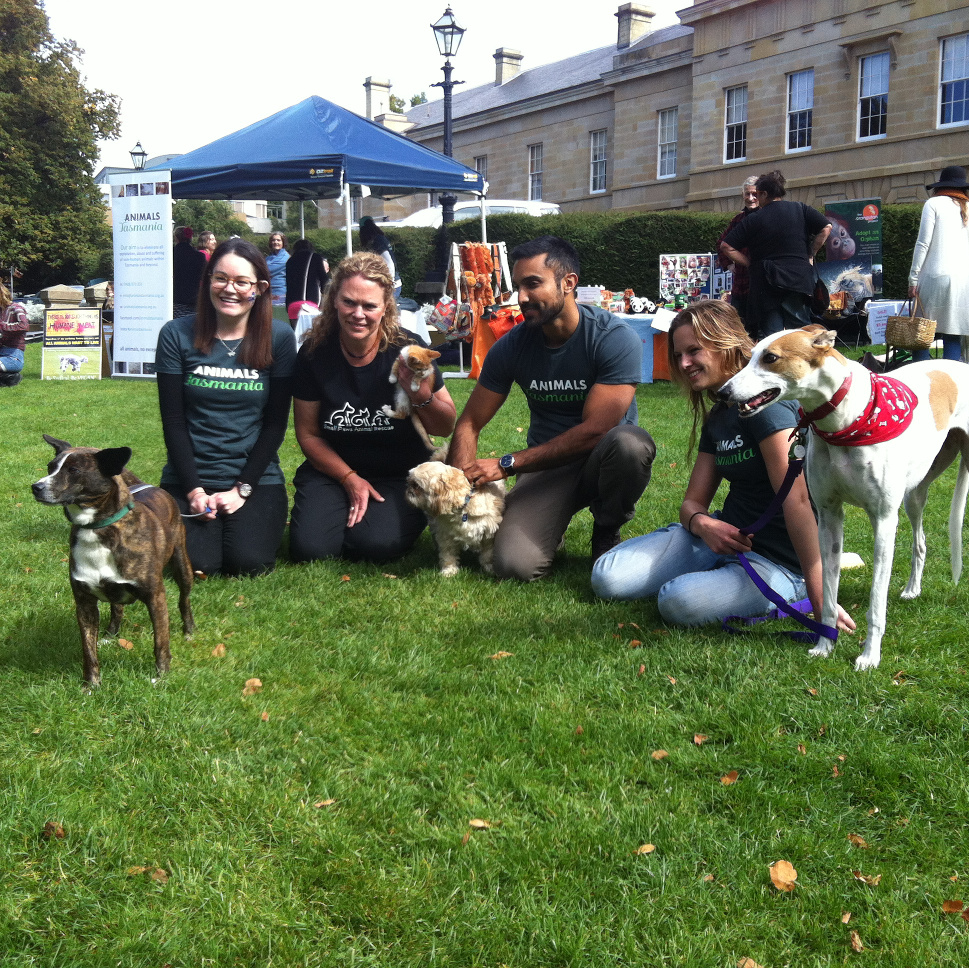
Animals Tasmania has launched!

Animals Tasmania is the new face of animal advocacy in Tasmania. We are there to speak for  non-human animals in Tasmania and beyond. All animals, no exception.


AT-launch-1